Two sides to memorials

by Mark Blackham

At the Kew Cemetery in Melbourne, I went searching for my ancestors’ graves. I found the grand memorial to my great-great-grandfather, John Halfey — a goldminer, financier, and politician. His grave is the largest monument in the cemetery, an imposing stone column and angel. Also buried there are his wife Annie, and three of their nine children. One died aged ten drowning while swimming in the Yarra River. Sorrow does not respect wealth. 

A few rows away, I found the plot of my great uncle and his wife. There was no headstone, no inscription — just an empty space and a scraggy shrub.

I cannot deny disappointment at the empty space. I was denied a literal touchstone with my past. The Halfey memorial allowed me to physically feel the family’s life and prominence. 

The emotional contrast between the two graves confronted a central tenet of the natural burials concept; not to add anything synthetic to the landscape. Memorials should not be lasting artificial structures. The memorial to the deceased is the natural area that remains and lives.

Some people worry about the impermanence of wooden memorials. When we first posed the natural burial idea to the Ministry of Health over 20 years ago it was opposed, citing people complaining about not being able to find ancestors graves at old cemeteries due to broken and missing memorials. Minor annoyance to descendants is not a strong reason to deny an individual their wish for a green burial!

The reality is that after five years, the number of visitors to a grave falls below one per year. But during those early years, there are visitors, and they’re grieving. They want something to stand in for the physical person who recently left us.

That’s why we invented the idea of the wooden marker. It is there when needed and will have decomposed when it ceases being needed. We found though that untreated pine fell apart within 18 months. So we use H3 treated pine so it lasts the length of the surviving family members.

Standing in Kew cemetery I realised stone endures way past immediate family members, but (and so) its meaning fades. There is no point in all that stone being there every hour and day of the week, waiting for occasional visits like mine. The cemetery records listed my relatives deceased in the grass plot just that same as those in the memorialised plot.

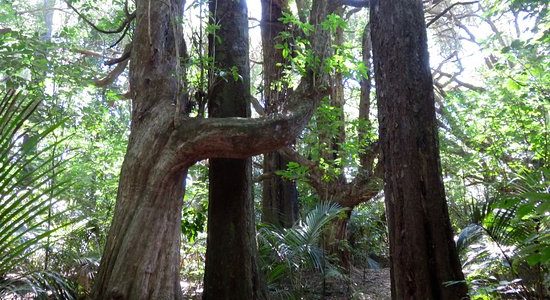
A far better memorial is a living one. Natural cemeteries are living organisms, feeding and harbouring life continuously – unbroken – no matter who visits. And when visitors do arrive, they are greeted by trees, insects, and bird song. The shrub growing above the unmarked grave at Kew was supporting life, not dead memories. When you stand graveside at a natural cemetery, you stand among your ancestors, and the life they stimulated. There is no better memorial.

Natural cemetery prices

We’ve compiled the 2025 list of natural cemetery prices, combining the plot and interment costs (price of the land, and price of digging and filling the grave).

The average cost of a natural cemetery plot is $4,075 (excluding extras such as weekend interments).

The most expensive sites are in Fairhall in Marlborough ($7596) – though admittedly a lovely location, and Waitkumete in Auckland ($6590) – a heavily landscaped zone.

The cheapest sites are in Taupo ($1455) – overlooking a deep forested valley, and Buller ($2292).

For the full list, see this page.

Public talk in Carterton 30 April

Our founder and director Mark Blackham is speaking in Carterton on 30 April about the courage required to start and drive the natural burials movement in NZ over the past 25 years.

Mark’s free public talk is part of a Courageous Leadership series run by the Tū Hauoranga Trust.

All are welcome to the event at the Carterton Events Centre, 5:30pm, 30 April.

Free tickets are here

Waikanae funeral home certified

We’re very pleased to announce that the Waikanae Funeral Home has been certified by us for natural burials. The whole team are enthusiastic about the concept, and demonstrated ability to able to handle all aspects, from body preparation to burials, and family personalisation of the funeral. They have a range of natural caskets and shrouds available and facilities for longer pre-burial preparations. We highly recommend them.

How to make a shroud

We have seen a considerable increase in inquiries about using shrouds, and an increase in their actual use.

They are a wonderful DIY project for yourself or for a loved one, and add dignity and natural aura to a burial. Patterns have been graciously made available here: https://cindea.ca/shrouds.html

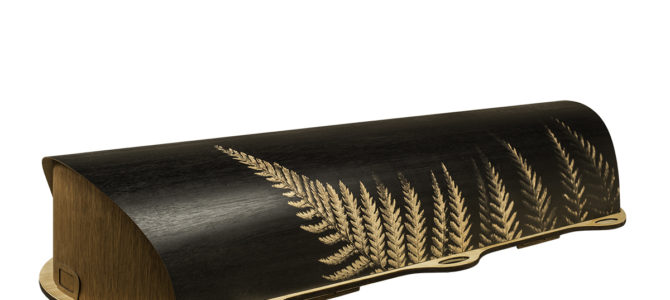
Or you can buy beautiful shrouds from people experienced in the combination of beauty, natural fabrics, practicality and strength, required of shrouds. Two options are are many variations available from ake ake shrouds, and the simpler format at return to sender.

You can use shrouds as carriers of the body, in which case carrying handles are recommended. For shallow burials, lowering is a very physical exercise. It is made easier if a base board is used outside or inside the shroud, and the body lowered using straps tucked through handles and under the board. They are be recovered by pulling out, or remain inside the grave.

Image from Ake Ake Shrouds.

A DIY family funeral

A wonderful family came together to handle the natural burial of a beloved parent themselves. Their work is a testament to their love, cooperation, resilience and calmness.

We always recommend our certified funeral directors, but this family showed you can do it yourselves. In this photo-story below, you’ll see how.

Hope Family Funerals certified

We are delighted to announce that Hope Family Funerals in Tauranga is now certified by us for natural burials. This certification is well deserved given their commitment to the concept and to meeting the needs of families. Hope Family Funerals is the only funeral director in the region to be certified by us, which means local families now have an option that meets our requirements for professionalism, personalisation, best natural burial practices, and environmentally conscious conduct.

A special thank you to Funeral Director Eva Wolf who was instrumental in bringing this to fruition.

Natural Burials certification of funeral directors is a voluntary nationwide system to provide assurance to the public wanting to use a natural cemetery, green their burial or adopt alternative methods. We inspect their practices to ensure they follow burial and body preparation protocols, understand and support the concepts. and offer natural choices as standard.

Certified Shrouds

We’ve noticed a definite upswing in use of shrouds for burials, even when caskets are used.

For the first decade of natural burials in NZ, we saw only one or two shrouds used a year. But public willingness and comfort is now changing rapidly.

So we are delighted to announce our certification for natural shrouds from Ake Ake Shrouds, made with love by the wonderful Karen Williamson.

Karen has been a long time supporter of the natural burials movement.

There is more information on her website, and she is always happy to answer questions and take commissions.

https://www.akeakeshrouds.co.nz/

Taupō’s Natural Burial zone formally certified

Logo

Description automatically generated

Joint Media Release by Natural Burials Organisation and Taupō District Council:

3 August 2021

Taupō’s Natural Burial zone formally certified

A new natural burial zone recently opened by the Taupō District Council has now been certified by the Natural Burials organisation.

Natural burials use nature’s own decomposition process: non-embalmed bodies are placed in untreated wood caskets, and buried in shallower graves than usual, with trees grown in the area above. 

The zone in the main Taupō Cemetery on Rickit Street has been certified for meeting the organisation’s protocols governing manner of burial, for ease of access, room for expansion, and focus on public communication.

Mark Blackham, Natural Burials’ Founder and spokesperson, said the zone took pride of place near the entrance to the cemetery.

“The stand of native bush growing there will become iconic to the cemetery and will be a permanent memorial for those buried there. 

“We’re thrilled that the council has agreed to apply the principle of adding nothing synthetic to the soil, and to let nature do its work,” Mr Blackham said.

He said practical considerations were important for the success of natural burials, including access and layout. “It’s a great boon that it is very easy for families and friends, and future visitors, to get to the flat site and use it.”

Natural Burials applauded the commitment of the council and in particular, cemetery manager Kieran Smith, in delivering on the expectations of the local community.

In turn, Mr Smith congratulated his team on their hard work in making this increasingly popular option for people and families who hold strong environmental beliefs to be buried at Taupō Cemetery in line with their philosophies.

“We are all extremely proud to have successfully provided this important choice,” he said.

Deputy Mayor Christine Rankin said the new natural burial zone is a brilliant step forward in giving people in the Taupō District a greater choice in how they wish their remains to be returned to the earth.

“Now, if that is their wish, a person can ensure their body naturally reintegrates itself into the soil for the benefit of the environment.”

A group of Taupō residents had been advocating for natural burials, and over 50 people turned up to view the prepared site recently.

“Our surveys show that at least one third of locals are enthusiastic about natural burials. It gives many people some happiness to think their body will be there after they die. We can be confident there will be plenty of future users of the site,” Mr Blackham said.

Contact: Mark Blackham, 021 891 042

Taupo Natural burial zone opening

Mark Blackham, of Natural Burials, will be speaking at a public meeting to open the Taupo Natural Burial zone, this Thursday – 17 June.

10am, 17th June 2021

Taupo Funeral Services, 117 Ricket Street

Sign up to our newsletter

We send irregular newsletters to update on developments at existing cemeteries and progress on new ones.